How to Plan a Group Trip Without Losing Friends
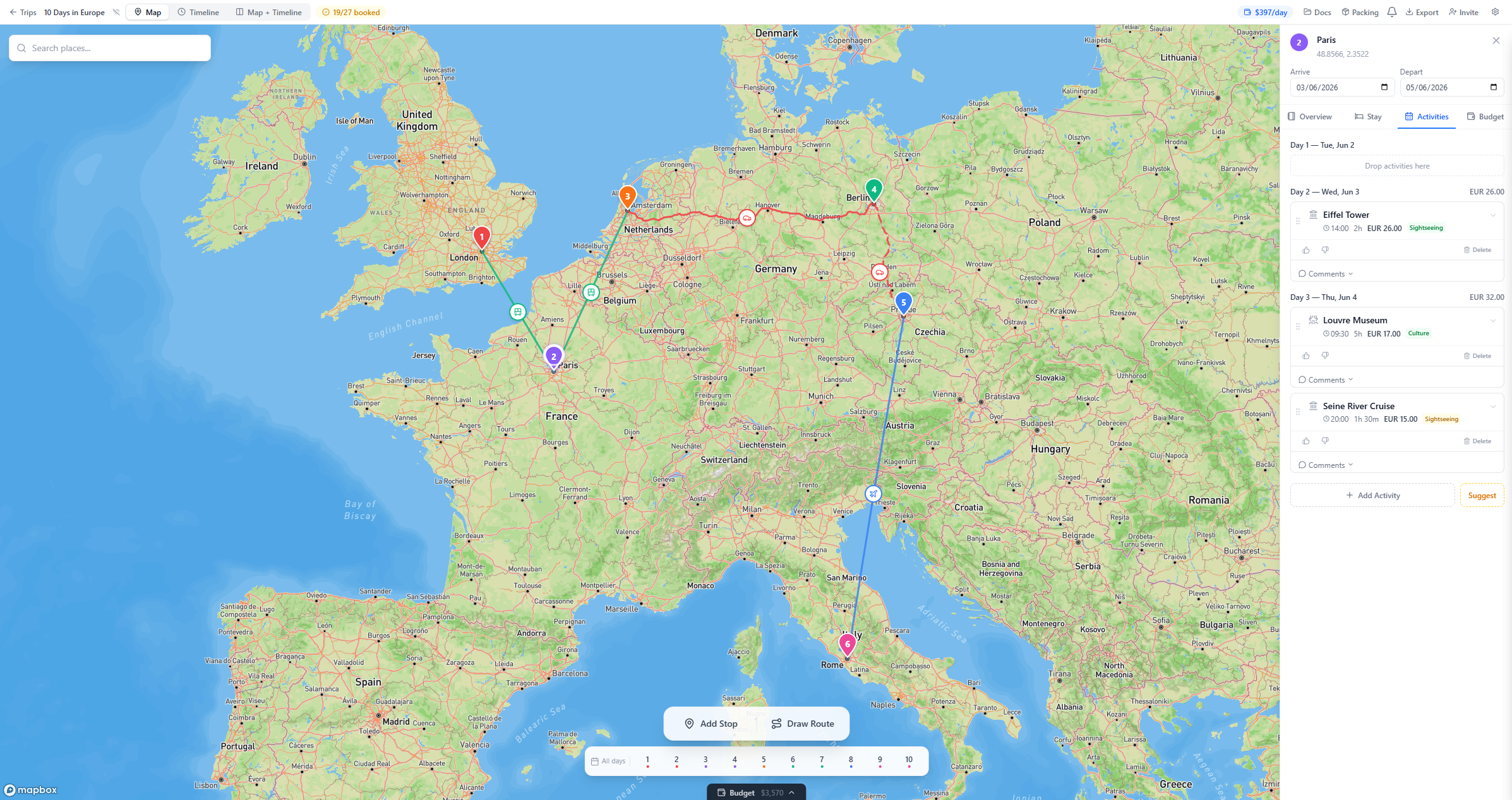
Group trips fail because of bad process, not bad people. The fix is a shared itinerary everyone can see, structured decision-making with deadlines and voting, an early budget conversation, and expense tracking from day one. Use one shared planning tool instead of splitting coordination across WhatsApp, Google Docs, and Splitwise.
Every friend group has the same story. Someone says “we should go somewhere together.” Everyone gets excited. A WhatsApp group gets created. Three weeks later, you have 47 unread messages, zero bookings, and one person quietly doing all the actual work.
Here’s how to fix that.
The “unofficial planner” problem
Every group trip has one. The person who creates the spreadsheet, researches the flights, messages everyone individually to ask about dates, and spends their evenings comparing Airbnb listings while everyone else replies “whatever works for me!”
This person did not volunteer. They just happen to care enough to get things moving, and now they’re managing a part-time project for free.
The unofficial planner is maintaining the itinerary in Google Docs, tracking who’s paid what in Splitwise, fielding “wait, where are we staying again?” messages at 11pm, and absorbing everyone’s indecision as their personal stress. By the time the trip starts, they’re already tired.
The fix isn’t “everyone should help more” — that never works. The fix is a better system that doesn’t require one person to hold everything together.
Make decisions on a deadline, not a discussion
The biggest time sink in group trip planning is open-ended decision-making. “What do you guys think about Barcelona?” followed by six people slowly trickling in with opinions over four days, followed by someone suggesting Lisbon instead, followed by starting over.
Set a simple structure:
One person proposes 2-3 options. Not an open floor. Not “where should we go?” Narrow it down first, then present choices. “Here are three options that work for our dates and budget — pick one.”
Set a 48-hour deadline. No vote after the deadline means you’re happy with whatever wins. This prevents the “I haven’t had time to think about it” stall that drags on for weeks.
Use async voting, not live discussion. Group chats are terrible for decisions because the loudest voices win and quiet people don’t engage. A voting mechanism — even a simple poll — lets everyone weigh in on their own time without the social pressure of disagreeing in real time.
Give the planner tie-breaking authority. If the group can’t decide, the person doing the work gets final say. This is fair. They’re the ones who’ll have to book it.
This structure works for every decision: destination, accommodation, activities, even restaurants. Propose, vote, deadline, done.
Have the money conversation early
Budget is the topic nobody wants to bring up and the one that causes the most resentment if ignored.
Different people in your group have different financial situations. That’s fine. What’s not fine is discovering this on day three when someone’s anxious about every restaurant choice and someone else keeps suggesting expensive activities.
Set a budget range before you pick a destination. Not a precise number — a range. “Are we thinking 50-80 EUR per day or 100-150 EUR per day?” This single question eliminates destinations that don’t fit and sets expectations before anyone’s emotionally attached to an itinerary.
Track shared expenses from the start. Not at the end. Not “we’ll figure it out later.” From the moment someone pays for the first Airbnb deposit, every shared cost goes into a tracker. Who paid, how much, for what, and how it splits.
Plot a Trip handles this with a shared budget tracker that sits alongside the itinerary. Everyone sees what’s been spent, in any currency, and the cost splitting calculates who owes whom automatically. No spreadsheets, no end-of-trip accounting drama.
If you use a different tool, that’s fine — just use something. The worst outcome is arriving home to a vague sense that things weren’t split fairly and nobody has the receipts to prove otherwise.
Agree on splitting rules up front. Equal split for shared things (accommodation, group meals). Individual tracking for personal spending (drinks, shopping, activities some people skip). Decide this before the trip, not during an argument about whether the person who didn’t drink wine should pay for the bottles.
One shared plan, not six different versions
The most common group trip failure mode isn’t disagreement — it’s information asymmetry. One person knows the check-in time. Another person has the restaurant reservation details. A third person booked the train tickets but forgot to share the confirmation. Everyone has a different understanding of what’s happening tomorrow.
This happens because the plan lives in fragments: a Google Doc here, a booking email there, a screenshot in a chat thread somewhere. Nobody has the complete picture.
The fix is a single shared itinerary that everyone can see and edit. When the accommodation changes, everyone sees it. When someone adds an activity suggestion, it appears for the whole group. When transport gets booked, the details are attached to the right stop.
Plot a Trip is built for exactly this — a shared map and itinerary where the whole group sees the same plan in real time. But even if you use a shared Google Doc, the principle is the same: one source of truth, visible to everyone, updated in real time. Zero “I didn’t know about that” moments.
What actually works for groups of 4-8 people
After all the theory, here’s a concrete structure that works:
Week 1-2: Align on basics. One person (the planner) proposes 2-3 destination options with rough dates and budget ranges. Group votes within 48 hours. Done.
Week 2-3: Book the bones. The planner books accommodation and major transport (flights/trains). These are the hardest things to change later and the most expensive if delayed. Share all confirmations in the shared plan immediately.
Week 3-4: Fill in the fun. Everyone suggests activities and restaurants for each stop. Vote on anything that affects the group. Individual activities don’t need group approval — just add them to the shared plan so people know where you’ll be.
During the trip: Track and flex. Log shared expenses as they happen. Keep 1-2 buffer days with no fixed plans — someone will want downtime, someone will discover something spontaneous, and the weather will mess up at least one outdoor plan.
After the trip: Settle up immediately. Don’t let expense settling drag on for weeks. Review the shared expense log within 48 hours of getting home and send the settlement transfers. Clean break, no lingering resentment.
The planner deserves better tools
The unofficial planner isn’t going away. Every group needs someone willing to get things moving. But that person shouldn’t need to juggle four apps and a spreadsheet to do it.
If your current system involves copying booking details between apps, manually converting currencies, or chasing people for their share of expenses — the problem is the tools, not the group.
One map. One budget. One shared plan. That’s what group trip planning should feel like.
Start planning your group trip free.
Frequently Asked Questions
How many people is too many for a group trip?
Groups of 4–8 people hit the sweet spot between variety and coordination. Below 4, you lose the group energy. Above 8, decision-making becomes exponentially harder — every choice takes longer and someone always feels unheard. If your group is larger than 8, split into sub-groups for daily activities and regroup for meals and accommodation.
How far in advance should you plan a group trip?
Start 3–4 months before departure for international trips, 6–8 weeks for domestic. The first two weeks should cover destination, dates, and budget alignment. Accommodation and major transport should be booked 2–3 months out to lock in group rates and availability. Activities can be decided closer to the trip.
What’s the best way to split costs on a group trip?
Track shared expenses from day one using a shared tool — not mental math or “we’ll figure it out later.” Split accommodation and group meals equally. Track individual spending separately. Settle up within 48 hours of returning home while the numbers are fresh.
How do you handle different budgets in a group?
Set a daily budget range before choosing a destination. Agree on splitting rules up front: equal split for shared costs, individual tracking for personal spending. Build the itinerary with a mix of free activities and paid experiences so no one feels pressured to overspend.
Related reading: See our euro trip itinerary tips for balancing budget and experience, or learn why your trip planning tool stack is more complex than it needs to be.