Top 5 Must-See Cities on Your Euro Trip
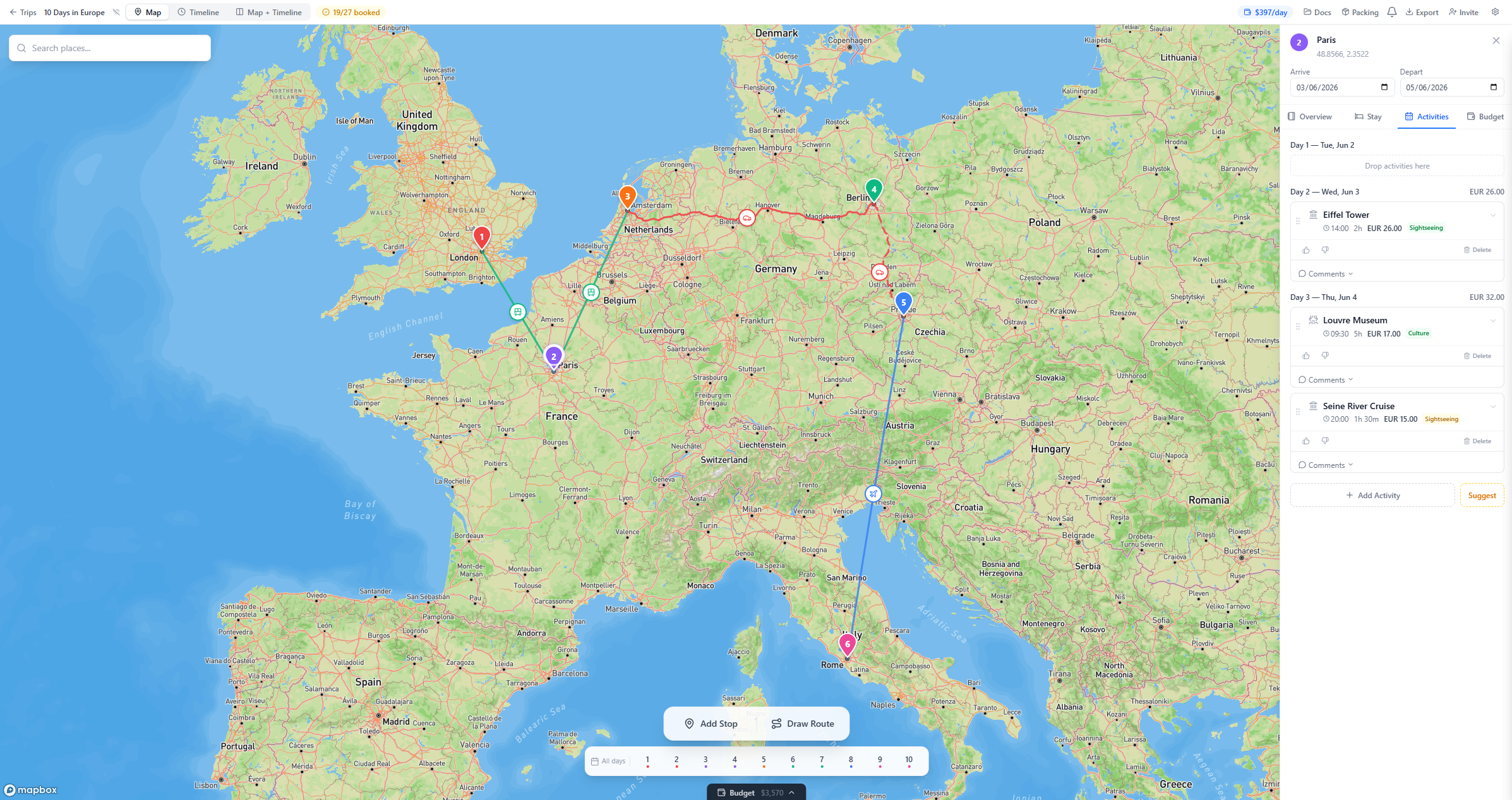
The five best cities for a euro trip are Paris, Barcelona, Rome, Prague, and Lisbon — routed in that order (Lisbon → Barcelona → Rome → Prague → Paris) to minimize backtracking. A 16-night trip across all five costs approximately 2,280 EUR per person at mid-range comfort, covering accommodation, food, activities, and inter-city transport.
Not every European city deserves three nights on your itinerary. Some earn a quick stopover, others justify a week. These five cities are the ones worth building your entire euro trip around — each for different reasons, at different price points, and each offering something you genuinely cannot get elsewhere.
1. Paris — The city that earns its reputation
Paris tops every “best European cities” list for a reason, and it is not just the Eiffel Tower. It is the only city in Europe where you can spend a full week and still feel like you barely scratched the surface.
What makes it essential: The art is obvious (the Louvre, Musée d’Orsay, Rodin Museum), but the real draw is how walkable Paris is. Every arrondissement has its own character. Montmartre feels like a village. The Marais mixes medieval streets with contemporary galleries. Le Quartier Latin has the best bookshops in Europe. You do not need a plan — just walk.
Daily budget: 100-150 EUR for mid-range travelers. Accommodation runs 80-130 EUR per night for a decent hotel or well-located Airbnb. Food is surprisingly affordable if you eat like Parisians — a bakery croissant and coffee for 4 EUR, a croque monsieur at a café for 10 EUR, and one serious dinner at 35-50 EUR.
Where to save: French national museums are free on the first Sunday of the month. The Paris Museum Pass (62 EUR for 4 days) pays for itself if you visit the Louvre, Orsay, and Versailles. Skip the tourist boats on the Seine — a regular Batobus river taxi costs 19 EUR for unlimited day use and covers the same views. Skip Montparnasse Tower and head to Sacré-Cœur for a free panoramic view of the entire city.
How long: 3-4 nights minimum. Paris rewards slow exploration. Rushing through it in 2 nights is the most common euro trip mistake.
2. Barcelona — Where the beach meets the city
Barcelona is the rare European city that offers world-class architecture, a legitimate beach, and some of the best food on the continent — all within walking distance.
What makes it essential: Gaudí’s buildings (Sagrada Família, Park Güell, Casa Batlló) are unlike anything else in Europe. The Gothic Quarter has narrow medieval streets that open into hidden plazas. La Boqueria market is sensory overload in the best way. And after a day of sightseeing, you are 10 minutes from the Mediterranean.
Daily budget: 80-120 EUR mid-range. Accommodation averages 60-100 EUR per night. The menú del día (fixed lunch menu) at local restaurants runs 12-16 EUR for three courses including wine — this is how you eat well without spending dinner prices for every meal.
Where to save: Book Sagrada Família tickets online in advance (26 EUR) — walk-up prices are higher and lines are brutal. Spend an evening in the Barceloneta neighborhood instead of Las Ramblas, where tourist traps inflate prices by 30-40%. The Magic Fountain light show at Montjuïc is free and spectacular. Take the metro (11.35 EUR for a T-Casual 10-trip card) instead of taxis.
Where to splurge: One meal at a tapas bar in El Born or Gràcia — order patatas bravas, jamón ibérico, and whatever the waiter recommends. This is a 25-35 EUR meal that will be one of the best of your trip.
How long: 3 nights. Two for the city, one for the beach. Barcelona is compact enough to cover well in three days without feeling rushed.
3. Rome — 2,000 years of history you can walk through
Rome is not a museum behind glass — it is a city where you walk past a 2,000-year-old temple on your way to get coffee. History is layered into every block, and the food is arguably the best in Europe.
What makes it essential: The Colosseum, the Roman Forum, the Pantheon, the Vatican — these are not just tourist attractions, they are foundational pieces of Western civilization. But Rome’s real magic is the side streets: Trastevere at dusk, a plate of cacio e pepe at a neighborhood trattoria, the view from Pincian Hill at sunset. The city feels alive in a way that few European capitals match.
Daily budget: 80-130 EUR mid-range. Hotels near the historic center run 70-120 EUR per night. Roman food is excellent and affordable — a proper pasta lunch at a local spot costs 10-14 EUR. Pizza al taglio (by the slice) from a street counter is 3-5 EUR and often better than what you would get at a sit-down restaurant.
Where to save: Book Vatican Museums online (17 EUR) — the walk-up line regularly exceeds 2 hours. The Pantheon is free. The Roman Forum and Colosseum share a combined ticket (18 EUR for 2 days). Many churches contain masterpieces (Caravaggio paintings in San Luigi dei Francesi, Bernini sculptures in Santa Maria della Vittoria) and are completely free.
Where to splurge: A dinner in Trastevere. Sit outside, order the house wine (5-8 EUR per carafe), and let the evening stretch. A full meal with antipasti, pasta, and dessert runs 30-40 EUR per person — half what you would pay for equivalent quality in Paris.
How long: 3-4 nights. Rome has enough depth for a week, but 3 full days let you cover the major sites plus the neighborhoods that make the city feel personal.
4. Prague — Europe’s best-value capital
Prague offers Gothic architecture, a world-class beer scene, and one of the lowest daily costs of any major European capital. It is the city that makes your euro trip budget stretch the furthest without compromising on experience.
What makes it essential: The Old Town Square feels like stepping into a fairy tale — astronomical clock, baroque churches, medieval towers. Prague Castle is the largest ancient castle complex in the world. Charles Bridge at sunrise, before the crowds, is one of the best free experiences in Europe. And Czech beer (50 CZK / ~2 EUR per pint in a local pub) is both excellent and absurdly cheap.
Daily budget: 50-80 EUR mid-range. Accommodation runs 35-60 EUR per night for a well-located hotel. A full restaurant meal with beer costs 8-15 EUR. Public transport is 1.50 EUR per ride.
Where to save: Almost everything in Prague is affordable, but you can save further by eating in neighborhoods outside the Old Town — Vinohrady and Žižkov have the best local restaurants at 30-40% less than tourist center prices. The Prague Castle grounds are free to walk (you only pay to enter specific buildings). Join a free walking tour (tip-based) to cover the major sites with context.
Where to splurge: A multi-course tasting menu at a Czech restaurant. Prague has a growing fine dining scene where 50-70 EUR buys a meal that would cost 150+ EUR in Paris or London. Restaurants like Field or La Degustation offer Michelin-quality food at Central European prices.
How long: 2-3 nights. Prague is compact enough to cover in 2 full days. A third night lets you explore the neighborhoods and beer culture at a slower pace.
5. Lisbon — Europe’s most underrated capital
Lisbon is the city that euro trip veterans keep recommending to first-timers. It has everything — history, nightlife, beaches nearby, incredible food — at a price point well below Western European averages.
What makes it essential: The light. Lisbon has a quality of light that makes the city glow, especially in the afternoon when the sun hits the pastel-colored buildings of Alfama. The trams climbing impossibly steep hills, the viewpoints (miradouros) scattered across seven hills, the sound of fado drifting out of tiny bars at night — Lisbon has a character that no other European capital matches.
Daily budget: 60-100 EUR mid-range. Accommodation runs 50-80 EUR per night. A pastel de nata (custard tart) costs 1.20 EUR and is available on every corner. A full seafood lunch at a local tasca runs 10-15 EUR. A glass of Portuguese wine is 3-5 EUR.
Where to save: Skip the iconic Tram 28 during peak hours (it is packed with tourists and a pickpocket hotspot) and either walk the route or take it early morning. The LisboaCard (27 EUR for 24 hours) includes unlimited public transport plus free entry to major sites like Jerónimos Monastery and the Belém Tower. Explore the Alfama neighborhood on foot — it is free, it is beautiful, and the street art is some of the best in Europe.
Where to splurge: A dinner in the Príncipe Real or Santos neighborhoods. Fresh grilled fish, Portuguese wine, and a view — 25-35 EUR for a meal you will remember. Alternatively, take a day trip to Sintra (40 minutes by train, 2.30 EUR each way) for fairy-tale palaces and forests.
How long: 3 nights. One for Alfama and Baixa, one for Belém and the western neighborhoods, one for a day trip to Sintra or the beaches at Cascais.
How to connect these five cities
The most efficient route that minimizes backtracking:
Lisbon → Barcelona → Rome → Prague → Paris
This moves you east from Portugal through the Mediterranean, then north to Central Europe, and west to France. Each leg has affordable transport options:
- Lisbon → Barcelona: Budget flights (Ryanair/Vueling, 25-60 EUR booked 3-4 weeks ahead)
- Barcelona → Rome: Budget flights (30-50 EUR) or overnight train if you want the experience
- Rome → Prague: Budget flights (25-45 EUR) or a scenic train via Vienna (splitting the journey with a 1-night Vienna stopover is worth it)
- Prague → Paris: Direct train or bus (FlixBus from 25 EUR, ~14 hours overnight) or budget flight (30-60 EUR)
Total inter-city transport: 110-215 EUR depending on how far ahead you book and whether you prioritize cost or time.
Plot a Trip lets you drop pins on each city, draw color-coded routes between them, and see the full itinerary on a map — so you can spot backtracking before it costs you money. Add accommodation and transport costs per stop, and your group can see the whole trip budget in one view.
Total budget breakdown for all five cities
Here is what a 16-night trip across all five cities looks like at a mid-range comfort level:
| City | Nights | Accommodation | Food | Activities | Daily Total |
|---|---|---|---|---|---|
| Lisbon | 3 | 65 EUR/night | 30 EUR/day | 15 EUR/day | ~110 EUR/day |
| Barcelona | 3 | 80 EUR/night | 35 EUR/day | 15 EUR/day | ~130 EUR/day |
| Rome | 3 | 90 EUR/night | 30 EUR/day | 15 EUR/day | ~135 EUR/day |
| Prague | 3 | 45 EUR/night | 20 EUR/day | 10 EUR/day | ~75 EUR/day |
| Paris | 4 | 100 EUR/night | 40 EUR/day | 20 EUR/day | ~160 EUR/day |
Estimated totals:
- Accommodation: ~1,285 EUR
- Food: ~510 EUR
- Activities: ~245 EUR
- Inter-city transport: ~160 EUR
- Local transport: ~80 EUR
- Grand total: ~2,280 EUR per person for 16 nights across 5 cities
That is roughly 142 EUR per day for a comfortable mid-range euro trip covering five of Europe’s best cities. Budget travelers who use hostels, cook some meals, and stick to free activities can cut this to 70-90 EUR per day. Luxury travelers should expect 200-300 EUR per day.
Track your actual spending against these estimates as you go. Plot a Trip includes built-in multi-currency budget tracking next to your itinerary, so you can see exactly where you stand at any point in the trip — across euros, Czech koruna, and whatever else you encounter.
Key takeaways
Build your euro trip around cities that justify the time, not just the Instagram photo. Paris, Barcelona, Rome, Prague, and Lisbon each offer something distinct — from Prague’s 2 EUR pints to Paris’s world-class art to Lisbon’s golden light.
Route your trip geographically to avoid backtracking. Book transport 3-4 weeks ahead for the best prices. Eat where locals eat, not where the menu has photos. And track your budget from day one so the last few days of your trip are just as good as the first.
One map, one budget, one itinerary. Start planning your euro trip free.
Related reading: Learn how to balance budget and experience across your euro trip itinerary, or see why your trip planning tool stack is more complex than it needs to be.