The Solo Trip Planning Checklist That Actually Covers Everything
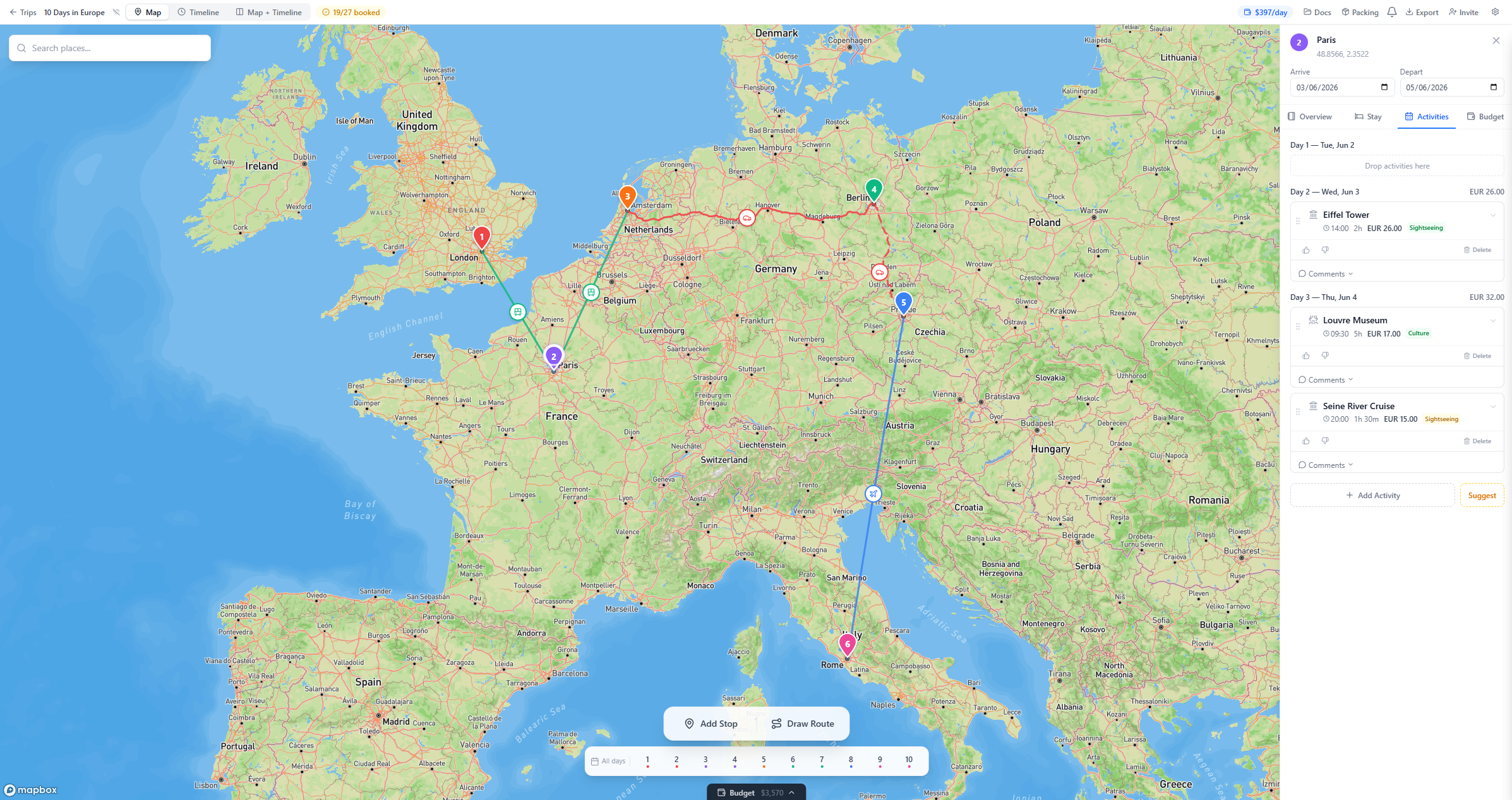
A complete solo trip planning checklist covers seven areas: trip type, route planning (on a map, not a list), budget with a 15–20% solo surcharge buffer, accommodation optimized for location and social options, advance transport booking for stressful legs, practical safety steps, and an itinerary structured for flexibility with no more than two must-do activities per day.
Solo trip planning is regular trip planning minus the group chat arguments, plus a few extra things only you need to worry about. No one’s going to catch your mistakes. No one’s going to remind you about the visa requirement or notice that your route backtracks 300 kilometers for no reason.
That’s why a checklist matters more when you’re traveling alone. Here’s the one that actually covers everything.
Before you plan anything: decide what kind of trip this is
Skip this step and you’ll waste hours researching things that don’t match your trip. Solo trips fall into a few categories, and each one changes what you need to plan:
The explorer. Multiple cities, lots of movement, sightseeing-heavy. You need detailed route planning, inter-city transport booked ahead, and a realistic daily activity limit.
The slow traveler. One or two bases, deep immersion, lots of unstructured time. You need solid accommodation in great neighborhoods, a short list of must-dos, and permission to have empty days on the itinerary.
The adventure trip. Hiking, diving, cycling, or other activity-focused travel. You need gear logistics, booking confirmations for guides or permits, and contingency plans for weather or fitness surprises.
The reset. You just need to be somewhere else for a while. Beach, mountains, quiet town. You need a comfortable place to stay and very little else on the schedule.
Pick one. Your planning effort should match the trip type, not some universal standard of “thorough preparation.”
The route: plan it visually, not as a list
This is where solo travelers make the most expensive mistakes — and where having no second pair of eyes hurts the most.
A list-based itinerary hides geography. “Day 1: Lisbon. Day 4: Barcelona. Day 7: Porto” looks fine in a spreadsheet. On a map, you’d immediately see that you’re flying past Porto to reach Barcelona and then backtracking. That detour costs you a flight and a travel day.
Your route checklist:
- Drop your must-visit places on a map and look at the actual geography before committing to an order
- Sequence stops to minimize backtracking — move in one general direction (loop, north-to-south, east-to-west)
- Check realistic travel times between stops, including airport transfers and transit connections
- Allocate nights per stop based on what’s actually there, not equal time everywhere
- Build in at least one buffer day per week with nothing booked — you’ll need it for weather, fatigue, or unexpected discoveries
- Identify your “skip if needed” stops — the ones you’d cut if you’re behind schedule or want more time elsewhere
Plot a Trip lets you drop pins, draw color-coded routes between them, and see travel times on a real map — so the backtracking problem is obvious before you book anything. But even Google Maps works for a basic geography check. The point is: look at a map before you commit to an order.
Budget: plan it tighter than you would for a group trip
Solo travel is more expensive per person than group travel. That’s not a reason to avoid it — it’s a reason to budget honestly.
You’re not splitting accommodation, taxis, or meal-sized portions. A private room costs what a private room costs. A taxi from the airport is the same price whether there are one or four people in it. Restaurant portions don’t get smaller because you’re alone.
Your budget checklist:
- Research daily cost ranges for each destination (accommodation + food + transport + activities)
- Add 15-20% buffer for solo-specific costs: single supplements, no-split taxis, eating out for every meal
- Pre-book the expensive items (flights, trains, accommodation) to lock in prices
- Identify where to save without sacrificing experience: hostels with private rooms, lunch specials, free walking tours, supermarket breakfasts
- Set a daily spending target and track against it from day one — not “I’ll figure it out at the end”
- If crossing currencies, note the exchange rates and factor in ATM/conversion fees
The biggest solo budget trap is food. When you’re with others, you cook sometimes, split a bottle of wine, share appetizers. Alone, every meal is a restaurant meal unless you consciously plan otherwise. Budget for that reality.
Accommodation: optimize for location and social options
Where you stay matters more when you’re solo. A poorly located hotel means solo taxi rides at night. A great hostel common room means instant company when you want it.
Your accommodation checklist:
- Prioritize walkable, central locations — especially for your first night in each city
- For social energy: book hostels with common areas, co-working spaces, or organized events
- For recharge time: book a private room or apartment where you can close the door and decompress
- Mix it up — a hostel for two nights when you want people, a quiet Airbnb for two nights when you don’t
- Check reviews specifically from solo travelers (search “solo” in review text)
- Verify check-in logistics: can you arrive late? Is there 24-hour reception or a lockbox? Solo means no one can wait at the accommodation while you sort out a delayed flight
- For first-time solo travelers: book at least the first two nights before arrival to remove the stress of figuring it out after a long travel day
Transport: book the stressful legs in advance
When you’re in a group, a missed connection is an annoying story. When you’re alone, it’s a problem you solve by yourself at 11pm in a city you don’t know.
Your transport checklist:
- Book all flights and long-distance trains in advance — these are the legs where rebooking is expensive and stressful
- For short-distance travel (under 3 hours), you can often book on arrival — but check frequency first. One bus a day means you book ahead.
- Download offline maps for every destination before you leave. Google Maps and Maps.me both support offline areas.
- Research airport/station to city center routes ahead of time — know the options before you land
- Save confirmation numbers, booking references, and e-tickets offline (screenshot or PDF, not just email links that need data)
- If renting a car solo, factor in the full cost honestly: rental + fuel + parking + tolls + insurance. In many destinations, trains are cheaper and less stressful
Safety: practical steps, not paranoia
Solo travel safety advice online ranges from useful to absurd. You don’t need a money belt, a doorstop alarm, and a fake wedding ring. You need the same situational awareness you’d use in any unfamiliar city, plus a few solo-specific precautions.
Your safety checklist:
- Share your itinerary with someone at home — a parent, friend, or partner who knows roughly where you’ll be and when
- Set up location sharing on your phone with one trusted person
- Register with your country’s embassy or travel advisory service if visiting higher-risk regions
- Save emergency numbers for each country (not just 911 — it’s different everywhere)
- Photograph your passport, visa, insurance card, and credit cards. Store copies in cloud storage and email them to yourself
- Check travel insurance covers solo activities you’re planning (some policies exclude motorbike rental, diving, or hiking above certain altitudes)
- Research neighborhood safety in each city — know which areas to avoid after dark, which is different from “this city is dangerous”
- Trust your instincts. If a situation feels off, leave. You don’t owe politeness to anyone who makes you uncomfortable
What you don’t need to worry about: Eating alone is normal everywhere outside of North America. Walking alone during the day is fine in virtually every tourist destination. Most people you meet are genuinely friendly. The world is safer than the travel safety industrial complex wants you to believe.
Communication and connectivity
Being unreachable is romantic in theory and stressful in practice. You need enough connectivity to navigate, translate, and handle emergencies — without paying roaming rates.
Your connectivity checklist:
- Get an international eSIM or local SIM plan before departure (Airalo, Holafly, or buy at the airport)
- Download offline language translation for each country (Google Translate supports offline packs)
- Download offline maps for every city and transit area
- Set up a VPN if visiting countries with restricted internet
- Save key addresses (accommodation, embassy, hospital) in your maps app as offline pins
- Tell your bank you’re traveling — nothing ruins a solo trip faster than a frozen card in a foreign ATM
Packing: less than you think, with a few solo-specific adds
Every packing list on the internet is too long. Here’s what actually matters for solo travel specifically — on top of whatever you’d normally pack for the climate.
Solo-specific packing adds:
- A portable door lock or rubber door wedge — cheap, tiny, adds peace of mind in budget accommodation
- A small padlock for hostel lockers
- A portable charger — your phone is your map, translator, camera, and emergency contact device
- Photocopies of key documents in a separate bag from the originals
- A basic first-aid kit: painkillers, plasters, anti-diarrheal, any prescription meds with a copy of the prescription
- One outfit that works for a nicer restaurant or cultural site — you’ll want it, and buying clothes abroad is a budget leak
The solo packing rule: If you can’t comfortably carry everything you’re bringing for 20 minutes of walking, you’ve packed too much. There’s no one to watch your bags while you run back for something. Everything goes where you go.
The itinerary itself: structure without rigidity
The biggest solo travel advantage is flexibility. The biggest solo travel mistake is wasting it by either over-scheduling or under-planning.
Your itinerary checklist:
- Book the anchors: accommodation, inter-city transport, and any activity that requires advance tickets (popular museums, guided tours, permits)
- Leave mornings and evenings unbooked — these are when the best solo travel moments happen (a sunrise walk, a conversation at a bar, an unexpected street festival)
- Plan no more than two “must-do” activities per day. Solo sightseeing is more tiring than group sightseeing because every decision and navigation task is on you
- Schedule at least one rest day per four travel days — not a “light day,” an actual nothing day
- Identify one “if I have time” activity per stop — things you’d love to do but won’t feel bad about skipping
- Build your itinerary visually so you can see the pacing. A map and timeline view reveals when you’ve stacked three exhausting days back-to-back in a way that a text list never does
The night before you leave
Final checklist:
- All confirmations and tickets downloaded offline
- Phone charged, portable charger charged
- Offline maps downloaded for first destination
- Travel insurance documentation accessible
- Someone at home has your itinerary and emergency contacts
- You know how you’re getting from the airport/station to your first accommodation
- Cards are unlocked for international use
- You’ve checked in online for your first flight (if applicable)
Frequently Asked Questions
Is solo travel more expensive than group travel?
Yes, solo travel typically costs 15–20% more per person because you can’t split accommodation, taxis, or meal portions. A private room costs what a private room costs regardless of whether one or two people sleep in it. Budget for single supplements and add a 15–20% buffer to your per-day estimates compared to group travel costs. The trade-off is complete control over where your money goes — no compromising on a hotel you didn’t want or a restaurant you wouldn’t have chosen.
How many activities should you plan per day when traveling solo?
No more than two must-do activities per day. Solo sightseeing is more tiring than group sightseeing because every decision and navigation task falls on you — from figuring out metro routes to choosing where to eat. Schedule at least one full rest day per four travel days. Leave mornings and evenings unbooked for the spontaneous moments that make solo travel rewarding.
What’s the most important safety step for solo travelers?
Share your itinerary with someone at home — a parent, friend, or partner who knows roughly where you’ll be and when. Set up location sharing on your phone with one trusted person and keep copies of key documents (passport, insurance, credit cards) in cloud storage. Beyond that, trust your instincts and use the same situational awareness you’d apply in any unfamiliar city.
Should you book accommodation in advance when traveling solo?
Book at least the first two nights before arrival to remove the stress of figuring it out after a long travel day. After that, you can mix advance bookings with flexibility depending on your comfort level and the destination. Prioritize walkable, central locations, especially for first nights in each city — a poorly located hotel means solo taxi rides at night.
One last thing
Solo trip planning feels heavier than group trip planning because there’s no one to share the mental load with. Nobody to say “I’ll handle the flights if you handle the hotels.” It’s all you.
That’s exactly why the right system matters. Not a travel agent, not a 47-tab browser situation — a single view of your route, your budget, and your schedule that you can adjust as you go.
One map. One budget. One itinerary. No group chat required. Start planning your solo trip free.
Related reading: If you’re planning with others next time, here’s how to plan a group trip without losing friends. For European route ideas, see our top 5 must-see cities on your euro trip.